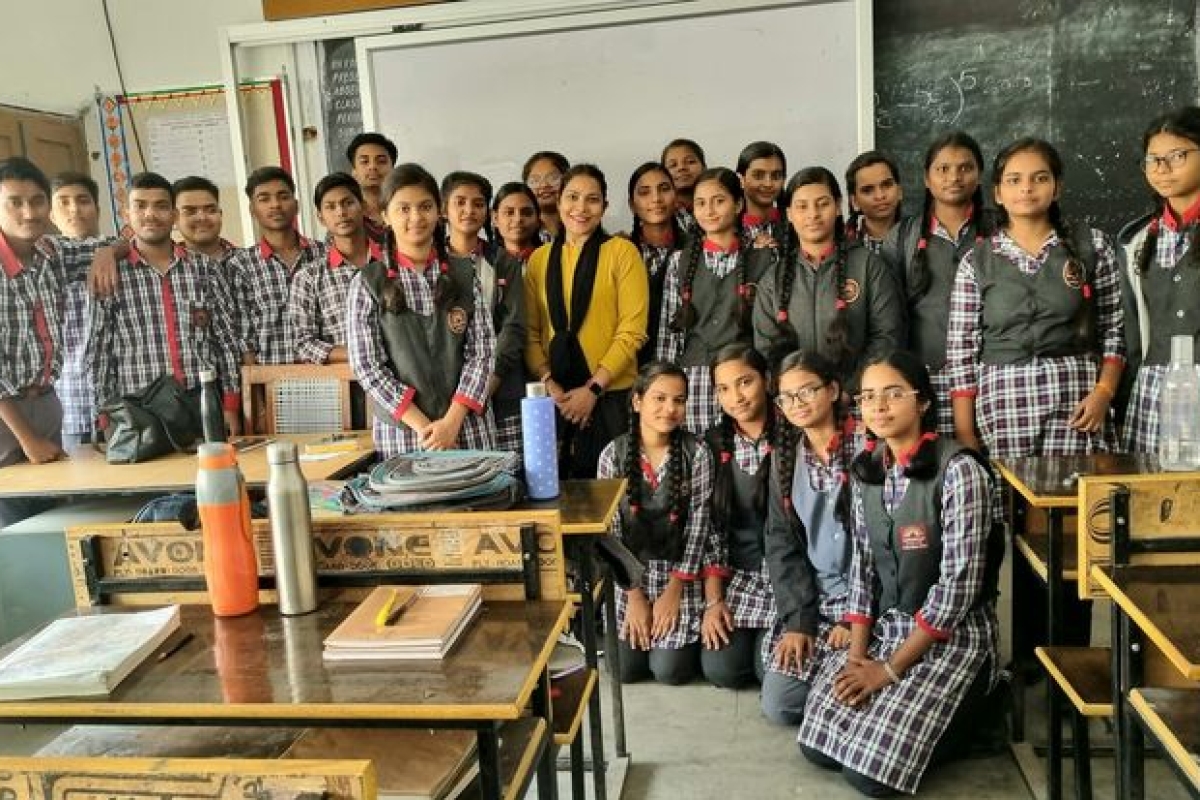
A nationwide government survey has revealed a concerning decline in student proficiency in mathematics and English as they progress to higher classes. Conducted by PARAKH (Performance Assessment, Review, and Analysis of Knowledge for Holistic Development) under the Ministry of Education, the Rashtriya Sarvekshan 2024 assessed more than 2.1 crore students across Classes 3, 6, and 9.
The data shows a significant drop in learning outcomes, particularly in numeracy and literacy, as students move to advanced grades.
Key Findings
According to the report:
The survey covered 21.15 lakh students from 74,229 schools in 781 districts across 36 States and Union Territories. PARAKH, an autonomous body set up under NCERT in 2023, is responsible for standardizing student assessments as envisioned in the National Education Policy (NEP) 2020.
Class-Wise Average Scores (2024)
Only Class 3 data was comparable across 2017, 2021, and 2024. The average scores for 2024 improved from the 2021 dip during the Covid-19 period but remained below the 2017 levels.
Why Learning Declines with Progression
A senior education ministry official, requesting anonymity, cited three key reasons behind the decline:
The ministry has advised States and UTs to integrate skilling in the curriculum and adopt Holistic Progress Cards (HPCs) — a 360-degree assessment method reflecting each learner’s cognitive, emotional, and physical development.
Positive Trends in Some States
While the national average remains slightly below pre-Covid levels, several states — including Punjab, Himachal Pradesh, Kerala, Uttar Pradesh, and Madhya Pradesh — have recorded their best-ever results in 2024.
NIPUN Bharat Making an Impact
Prof. Indrani Bhaduri, CEO of PARAKH, emphasized that Class 3 students showed encouraging improvement under the NIPUN Bharat Mission, which aims to ensure foundational literacy and numeracy by 2026–27. The gains are attributed to targeted interventions, teacher training, and structured pedagogy.
Next Steps
To bridge learning gaps, PARAKH has recommended: